All routes

Kyushu Loop in 9 Days: Fukuoka, Nagasaki, Kumamoto, Yufuin & Beppu

2 nights in Fukuoka, 2 in Nagasaki, 1 in Kumamoto, 1 in Yufuin and 2 in Beppu: a loop of Kyushu with a port city, a castle, the Aso volcano and two onsen towns.

FukuokaNagasakiKumamotoYufuinBeppu

  • 9 days, 8 nights
  • 5 stays
  • About 7,000 - 10,000 CNY per person (flights not included)
  • Best: March-May and October-November

How the route goes

Fly into Fukuoka for 2 nights: one day on the Nishitetsu line to Yanagawa for a canal boat ride and eel, then Dazaifu Tenmangu and the Kyushu National Museum; one day in the city at Kushida Shrine, old Hakata, the Fukuoka Castle ruins, Ohori Park and Fukuoka Tower, with dinner at the Nakasu yatai stalls; and a third day for Kokura Castle and Mojiko in Kitakyushu. Take the train to Nagasaki for 2 nights: walk the Minamiyamate hillside past Glover Garden, Oura Church and Dutch Slope, see Dejima, ride the ropeway up Mount Inasa for the night view, then visit the Atomic Bomb Museum and Peace Park and take a boat to Gunkanjima. Take the train to Kumamoto for 1 night: see Kumamoto Castle and its keep under post-earthquake restoration, browse Sakuranobaba Josaien, take the bus up Aso to Kusasenri and the volcano museum, then visit Suizenji Jojuen in the morning before the Kyushu Odan bus to Aso and Yufuin. Take the bus to Yufuin for 1 night: a night in a ryokan with its own hot spring, an evening on Yunotsubo Street and at Lake Kinrin, and the morning mist on the lake at dawn; with an extra day, soak in an open-air bath facing Mt Yufu, or climb it. Take the bus to Beppu for 2 nights: see all seven Hells in one day, steam your lunch over the vents in Kannawa, and try a sand bath and the Meiji-era Takegawara Onsen; with an extra day, see the wild monkeys of Mt Takasaki, the Umitamago aquarium and ride the ropeway up Mt Tsurumi. Fly home from Fukuoka Airport.

  1. 01Fukuoka Arrive in Fukuoka + Canal City Hakata + Tenjin Underground Shopping Center and the Tenjin shopping area
  2. 02Fukuoka Yanagawa canal boat + steamed eel + Dazaifu Tenmangu + Kyushu National Museum
  3. 03Fukuoka · Nagasaki Train to Nagasaki + Megane Bridge and the stone bridges on the Nakashima River + Hamanomachi arcade
  4. 04Nagasaki Glover Garden + Oura Church + Dutch Slope + Dejima + Mount Inasa night view
  5. 05Nagasaki · Kumamoto Train to Kumamoto + Kumamoto Castle + Sakuranobaba Josaien
  6. 06Kumamoto · Yufuin Bus to Yufuin + Yunotsubo Street + Lake Kinrin
  7. 07Yufuin · Beppu Bus to Beppu + From Beppu Station to Kitahama + Takegawara Onsen
  8. 08Beppu Chinoike and Tatsumaki Hells + the five Kannawa Hells + lunch at Jigoku Mushi Kobo + sand bath at Hyotan Onsen
  9. 09Beppu A walk on the Kitahama waterfront and the hand bath by Beppu Station + Fly home from Fukuoka Airport

On your phone? The free iPhone app can copy this route too, with the same account.

Where to stay

  • Hotel around Hakata Station or Tenjin / Nakasu, Fukuoka (your choice)

    Fukuoka · 2 nights

  • Hotel around Nagasaki Station or Hamanomachi / Shianbashi (your choice)

    Nagasaki · 2 nights

  • Hotel around Kumamoto Sakuramachi Bus Terminal, Torichosuji or Shimotori (your choice)

    Kumamoto · 1 night

  • Ryokan with its own hot spring in Yufuin, dinner and breakfast included (your choice)

    Yufuin · 1 night

  • Hotel between Beppu Station's east exit and Kitahama, or a ryokan in Kannawa Onsen (your choice)

    Beppu · 2 nights

01

Arrive in Fukuoka + Canal City Hakata + Tenjin Underground Shopping Center and the Tenjin shopping area

Fukuoka

Canal City Hakata: shopping around the canal courtyard
  1. 13:30

    Arrive at Fukuoka Airport (FUK)

    Fukuoka Airport

  2. 14:30-15:00

    Free shuttle bus to the domestic terminal, then the subway to Hakata or Tenjin

    Flights from Hong Kong land at the international terminal, which has no subway station. After arrivals, take the free connecting bus to the domestic terminal, about every 5-7 minutes during the day and about 10 minutes' ride; at the domestic terminal go down to Fukuoka Airport station, and the Airport Line reaches Hakata in 2 stops (about 5 minutes) or Tenjin in about 11 minutes, 260 yen per person to either. With a lot of luggage you can take a Nishitetsu bus straight from the international terminal: platforms 6 and 7 go to Hakata Station; platform 8 goes to Tenjin, and since April 2026 there is also a nonstop express bus to the Nishitetsu Tenjin Expressway Bus Terminal, 500 yen per person, 17 runs a day.

  3. 15:15-15:45

    Hotel around Hakata Station or Tenjin / Nakasu, Fukuoka (your choice)

    Check in; 2 nights (2027-05-10 to 2027-05-12). Hakata Station is just two subway stops from the airport and is where the shinkansen to Kokura leaves, so it is the easiest base; Tenjin is the starting point of the Nishitetsu trains to Dazaifu and Yanagawa and is better for shopping and eating. The two are 5 minutes apart by subway, with Nakasu in between, so the yatai stalls are a walk away in the evening. The whole centre is safe, even walking late at night.

  4. 15:45-17:15

    Canal City Hakata: shopping around the canal courtyard

    Canal City Hakata

    A large mall between Hakata Station and Nakasu, with an artificial canal running through the middle and fountain shows. The Ramen Stadium on the 5th floor gathers ramen shops from around Japan. Bring your passport for tax-free shopping and ask before paying.

  5. 17:30-19:00

    Tenjin Underground Shopping Center and the Tenjin shopping area

    Tenjin Underground Shopping Center

    The underground mall runs north-south through Tenjin, linking the subway station with the department stores, so you don't need an umbrella in the rain. This is where drugstores and clothing shops are most concentrated.

  6. 19:15-20:15

    Dinner in Nakasu: Ichiran's main shop or another Hakata tonkotsu ramen

    Ichiran Main Shop

    Ichiran was founded in Fukuoka, and its main shop is by the Naka River in Nakasu, usually open 24 hours. Hong Kong has Ichiran too, so for something different try Shin-Shin in Tenjin or Hakata Ikkousha. Hakata ramen uses very thin noodles; choose the firmness when ordering (barikata is extra firm), and when the noodles are finished you can order a refill (kaedama), so keep the soup. A bowl is around 1,000 yen.

Tonight's stay
Hotel around Hakata Station or Tenjin / Nakasu, Fukuoka (your choice)
Also on the way
Hakata Riverain, JR Hakata City
Getting around
Hakata Station, Canal City, Nakasu and Tenjin lie in a line and can all be walked, about 2.5 km in total; if you are tired, take the subway Airport Line, about 3 minutes a stop.
Tickets
The afternoon is all shopping, with no tickets needed.
Food
Make your first meal Hakata tonkotsu ramen; if you get hungry later, convenience stores and the ramen shops in Nakasu stay open late.
Where to stay
Hotel around Hakata Station or Tenjin / Nakasu, Fukuoka (your choice), 2027-05-10 to 2027-05-12, 2 nights. Hakata Station is just two subway stops from the airport and is where the shinkansen to Kokura leaves, so it is the easiest base; Tenjin is the starting point of the Nishitetsu trains to Dazaifu and Yanagawa and is better for shopping and eating. The two are 5 minutes apart by subway, with Nakasu in between, so the yatai stalls are a walk away in the evening. The whole centre is safe, even walking late at night.
Spending this day
about CNY 1,130Stay CNY 750 · Transport CNY 20 · Tickets CNY 0 · Food CNY 360

02

Yanagawa canal boat + steamed eel + Dazaifu Tenmangu + Kyushu National Museum

Fukuoka

Dazaifu Tenmangu and its approach street, with umegae mochi
Kyushu National Museum: Kyushu's history of contact with Asia
  1. 08:30-09:30

    Nishitetsu limited express from Fukuoka (Tenjin) to Nishitetsu Yanagawa

    Nishitetsu Fukuoka (Tenjin) Station

    Buy the Dazaifu-Yanagawa Sightseeing Ticket before you go: the digital version in the my route app is 3,620 yen per person, the paper one at Nishitetsu Fukuoka (Tenjin) station 3,730 yen per person (June 2026 prices). It covers the Nishitetsu trains there and back, the Yanagawa boat ride and a coupon booklet, is valid for two days, and works in either order, Yanagawa or Dazaifu first. The limited express takes about 50 minutes.

  2. 09:45-11:00

    Yanagawa river cruise: a punt along the old castle moats

    Yanagawa River Cruise

    A boatman poles you along for about 70 minutes; duck when passing under the very low stone bridges, and the boatman sings and narrates (in Japanese). The boat ticket in the pass only works with the Yanagawa Kanko Kaihatsu company, so ask for its boarding point when you leave Nishitetsu Yanagawa station and don't follow touts from other operators. On its own the ride is about 1,900 yen per person. The first boats in the morning are the least crowded. From December to February there are kotatsu boats with heated tables.

  3. 11:00-12:00

    Lunch in Okinohata: steamed eel on rice (unagi no seiro-mushi)

    Ganso Motoyoshiya

    In Yanagawa the grilled eel is steamed in a wooden box together with rice soaked in the sauce, unlike the Tokyo-style eel rice. Around Okinohata, where the boats finish, there are several old shops, Ganso Motoyoshiya and Wakamatsuya being the best known; a serving is about 4,000-6,000 yen. Arriving before 11:00 means less queuing.

  4. 12:15-13:15

    Nishitetsu from Yanagawa to Dazaifu, changing at Futsukaichi

    Nishitetsu Yanagawa Station

    From Okinohata back to the station is about 10 minutes by Nishitetsu bus. Change to the Dazaifu Line at Nishitetsu Futsukaichi; the pass only lets you exit at Dazaifu and Nishitetsu Yanagawa, so don't go through the gates when changing at Futsukaichi.

  5. 13:15-14:45

    Dazaifu Tenmangu and its approach street, with umegae mochi

    Dazaifu Tenmangu

    Dedicated to Sugawara no Michizane, the god of learning; free to visit. In May 2026 the main hall finished its biggest restoration in 124 years, with a new cypress-bark roof; the temporary hall by Sou Fujimoto used for the previous three years was only planned to stay until May 2026. Shops all along the approach sell umegae mochi (grilled rice cakes filled with red bean); eat them hot. Weekends and exam season are very busy, with a queue to cross the arched bridges.

  6. 15:00-16:30

    Kyushu National Museum: Kyushu's history of contact with Asia(optional)

    Kyushu National Museum

    Reached from the shrine grounds by escalator and a moving walkway through a tunnel in the hill. The permanent collection on the 4th floor (Cultural Exchange Exhibition) is 700 yen per person, 9:30-17:00, last entry 16:30. Closed on Mondays (on a holiday Monday it closes on Tuesday instead); on those days spend the time at a café on the approach street instead.

  7. 16:45-17:30

    Nishitetsu from Dazaifu back to Tenjin

    Dazaifu Station

    Most trains need a change at Futsukaichi; the pass still covers it.

  8. 18:00-19:30

    Dinner in Tenjin: Hakata motsunabe (offal hotpot)

    Tenjin

    A hotpot of beef intestines with garlic chives and cabbage, in a soy or miso broth, finished with ramen noodles or rice porridge in the leftover soup. Popular places need a booking in the evening.

Tonight's stay
Hotel around Hakata Station or Tenjin / Nakasu, Fukuoka (your choice)
Also on the way
Starbucks Dazaifu Tenmangu Omotesando, Kamado Shrine, Yanagawa Ohana
Getting around
The whole day is on Nishitetsu with one Dazaifu-Yanagawa Sightseeing Ticket: Tenjin → Yanagawa → change at Futsukaichi → Dazaifu → change at Futsukaichi → Tenjin. The pass becomes void once you return to the station you started from, so don't drop back into Tenjin halfway.
Tickets
Dazaifu-Yanagawa Sightseeing Ticket 3,620 yen per person digital or 3,730 yen paper (trains and boat included); Kyushu National Museum permanent collection 700 yen per person; Dazaifu Tenmangu is free.
Food
Lunch is steamed eel in Yanagawa, umegae mochi on the Dazaifu approach street as an afternoon snack, and motsunabe back in Tenjin for dinner.
If it rains
In heavy rain or strong wind the Yanagawa boats may not run; go only to Dazaifu and spend longer in the Kyushu National Museum (except Mondays). The pass is valid for two days, so you can also move Yanagawa to the next day.
Good to know
The Kyushu National Museum is closed on Mondays; on a Monday do this route without the museum.
Spending this day
about CNY 1,595Stay CNY 750 · Transport CNY 30 · Tickets CNY 365 · Food CNY 450

03

Train to Nagasaki + Megane Bridge and the stone bridges on the Nakashima River + Hamanomachi arcade

Fukuoka → Nagasaki

Megane Bridge and the stone bridges on the Nakashima River: find the heart-shaped stone in the embankment
Nagasaki Shinchi Chinatown
  1. 09:20-09:50

    Check out and head to Hakata Station (JR)

    Hakata Station

  2. 10:05-11:30

    Relay Kamome + Nishi-Kyushu Shinkansen Kamome Hakata → Nagasaki (change at Takeo-Onsen)

    Nagasaki Station

    About 1 hour 25-40 minutes, roughly one train an hour during the day. From Hakata take the Relay Kamome limited express to Takeo-Onsen, then cross the platform to the Nishi-Kyushu Shinkansen Kamome to Nagasaki; the connection is only about 3 minutes and you stay inside the gates. Buy one through ticket on the JR Kyushu website or at the Midori no Madoguchi in Hakata Station, covering both legs: 6,490 JPY per person reserved, 5,960 JPY non-reserved. Do not buy a ticket only as far as Takeo-Onsen, and do not exit the gates there.

  3. 12:00-12:30

    Hotel around Nagasaki Station or Hamanomachi / Shianbashi (your choice)

    Drop your bags first; 2 nights (2027-05-12 to 2027-05-14). Nagasaki Station is where the airport bus, the shinkansen and the highway buses to Fukuoka start, and it is handy for Peace Park, Dejima and the Inasayama ropeway; Hamanomachi and Shianbashi are the old town centre, within walking distance of Chinatown, Megane Bridge and Minamiyamate, with plenty of places to eat at night. Nagasaki is built on hills with many slopes and steps, so check how far the hotel is from a tram stop before you book.

  4. 12:30-13:30

    Lunch

  5. 13:45-14:30

    Megane Bridge and the stone bridges on the Nakashima River: find the heart-shaped stone in the embankment

    Megane Bridge

    A stone arch bridge built in 1634; with its reflection it looks like a pair of spectacles. Free. The heart-shaped stone is set in the embankment wall just downstream of the bridge, and you only see it from the riverside path below.

  6. 14:45-15:30

    Hamanomachi arcade: stroll and buy castella

    Hamanomachi Shopping Arcade

    Nagasaki's largest covered shopping arcade, fine in the rain. The old castella bakeries all have shops around here; buy small boxes and compare a few.

  7. 15:45-16:15

    Nagasaki Shinchi Chinatown

    One of Japan's three big Chinatowns: two streets in a cross, 15 minutes to walk round. Many shops close by 20:00-21:00, so don't leave dinner too late.

  8. 18:30-19:45

    Kozanro: Nagasaki champon and sara udon

    Kozanro

    An old restaurant in Chinatown. Champon is thick noodles in pork-bone broth with seafood and vegetables; sara udon comes with thin crispy fried noodles or thick stir-fried ones. On a first visit get the thin version and add the house vinegar-sauce. One champon and one sara udon to share is about right for two.

Tonight's stay
Hotel around Nagasaki Station or Hamanomachi / Shianbashi (your choice)
Also on the way
Nagasaki Confucius Shrine, Sofukuji Temple
Getting around
About 1 hour 25-40 minutes, roughly one train an hour during the day. From Hakata take the Relay Kamome limited express to Takeo-Onsen, then cross the platform to the Nishi-Kyushu Shinkansen Kamome to Nagasaki; the connection is only about 3 minutes and you stay inside the gates. Buy one through ticket on the JR Kyushu website or at the Midori no Madoguchi in Hakata Station, covering both legs: 6,490 JPY per person reserved, 5,960 JPY non-reserved. Do not buy a ticket only as far as Takeo-Onsen, and do not exit the gates there. Megane Bridge, Hamanomachi and Chinatown are all walkable, about 2 km in a loop. The Nagasaki tram costs 150 JPY a ride, and a one-day pass is 600 JPY, which you can buy in the phone app.
Tickets
The afternoon stops are all free.
Food
For the first meal have champon and sara udon; after dinner you can pick up a kakuni-manju (braised pork belly bun) in Chinatown for later.
Where to stay
Hotel around Nagasaki Station or Hamanomachi / Shianbashi (your choice), 2027-05-12 to 2027-05-14, 2 nights. Nagasaki Station is where the airport bus, the shinkansen and the highway buses to Fukuoka start, and it is handy for Peace Park, Dejima and the Inasayama ropeway; Hamanomachi and Shianbashi are the old town centre, within walking distance of Chinatown, Megane Bridge and Minamiyamate, with plenty of places to eat at night. Nagasaki is built on hills with many slopes and steps, so check how far the hotel is from a tram stop before you book.
Spending this day
about CNY 1,595Stay CNY 600 · Transport CNY 595 · Tickets CNY 0 · Food CNY 400

04

Glover Garden + Oura Church + Dutch Slope + Dejima + Mount Inasa night view

Nagasaki

Glover Garden: start at the top gate and walk down
Oura Church and the Oura Church Christian Museum next door
Dutch Slope and the Higashiyamate Western houses
  1. 08:00-09:45

    Glover Garden: start at the top gate and walk down

    Glover Garden

    Opens at 8:00, until 20:00 in November-December and 18:00 in January-March. From April 2026 admission rose to 1,300 JPY per person. Take tram line 5 to Ishibashi; the free Glover Sky Road inclined lift next to it takes you up to Gate 2, so you walk the garden downhill instead of climbing. The former Glover House is part of the World Heritage 'Sites of Japan's Meiji Industrial Revolution', and the slope looks out over the whole of Nagasaki harbour.

  2. 09:45-10:30

    Oura Church and the Oura Church Christian Museum next door

    Oura Church

    Japan's oldest surviving church and a National Treasure, where the 1865 'discovery of the hidden Christians' took place. Admission 1,000 JPY per person, including the museum. Open 8:30-17:30 from November to February and until 18:00 other months, last entry 30 minutes before closing. No photos inside, and there is a long flight of steps up to the door.

  3. 10:30-11:15

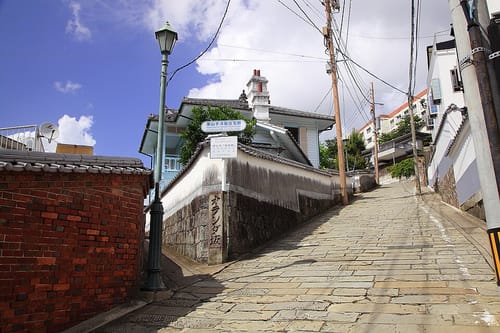
    Dutch Slope and the Higashiyamate Western houses

    Dutch Slope

    The flagstone lanes where foreigners lived after the port opened, free. The slope is steep and slippery in the rain, so wear shoes with grip. A few of the Higashiyamate Western houses are open free, so look in on the way.

  4. 11:30-12:30

    Shikairo: the restaurant where champon began

    Shikairo

    On the waterfront below Oura Church, with sea views upstairs. Champon is said to have been invented by its founder; it is busy at lunch, so arrive before 11:30 for a shorter queue.

  5. 12:45-14:15

    Dejima: the restored Dutch trading post

    Dejima

    Japan's only window to Europe during the closed-country era, with 16 trading-post buildings restored. Open 8:00-21:00, last entry 20:40, all year. Admission has been 1,100 JPY per person since April 2026, and there is no re-entry. About 20 minutes on foot from Shikairo.

  6. 14:30-16:30

    Back to the hotel for a rest

  7. 16:45-17:15

    Bus to the Fuchi Shrine station of the Nagasaki Ropeway

    From Nagasaki Station take a Nagasaki Bus to 'Ropeway-mae', about 10 minutes, then walk up into Fuchi Shrine to the ropeway station. There is also a free loop bus by reservation from several city-centre hotels to the ropeway; book it on the ropeway's website.

  8. 17:15-19:00

    Nagasaki Ropeway up Mount Inasa: from sunset to the night view

    Mount Inasa Observatory

    The ropeway takes about 5 minutes to the top and runs 9:00-22:00; the round trip has cost 1,900 JPY per person since April 2026 (it was 1,250). The summit observatory is free, looking down on the lights spread over the hills on both sides of the harbour. In November sunset is about 17:20, and the view is best half an hour after dark; it is windy and cold at the top, so bring a jacket. The ropeway stops in strong wind and thunderstorms.

  9. 19:30-20:45

    Dinner around Shianbashi: Toruko rice

    Shianbashi

    Toruko rice is a Nagasaki Western-style plate of pork cutlet, curry pilaf and spaghetti together; the old cafés and yoshoku restaurants around Shianbashi and Hamanomachi all serve it.

Tonight's stay
Hotel around Nagasaki Station or Hamanomachi / Shianbashi (your choice)
Also on the way
Nagasaki Confucius Shrine, Kameyama Shachu Memorial Museum
Getting around
From Minamiyamate to Dejima is about 20 minutes on foot; a 600 JPY one-day tram pass pays for itself after a few rides. Take the bus or the reserved free loop bus to Mount Inasa; coming back at night you can also take a taxi into town, about 10 minutes.
Tickets
Nagasaki City raised many admission fees sharply from 1 April 2026: Glover Garden 1,300 JPY per person, Dejima 1,100 JPY per person, the ropeway round trip 1,900 JPY per person; Oura Church is 1,000 JPY per person (run by the church, unchanged). Prices in older online guides are mostly out of date.
Food
Champon at Shikairo for lunch, and the Nagasaki yoshoku dish Toruko rice for dinner. Castella can be bought at the old shops near Dejima.
If it rains
In the rain the slopes and steps of Minamiyamate are slippery, so spend longer at Dejima and the Oura Church museum; in rain or fog you see nothing from the summit, so move Mount Inasa to another evening and spend the night in the Hamanomachi arcade.
Spending this day
about CNY 1,525Stay CNY 600 · Transport CNY 80 · Tickets CNY 445 · Food CNY 400

05

Train to Kumamoto + Kumamoto Castle + Sakuranobaba Josaien

Nagasaki → Kumamoto

Kumamoto Castle: climb the keep and walk the special viewing passage over the restoration work
  1. 10:00-10:30

    Check out and head to Nagasaki Station (JR)

    Nagasaki Station

  2. 10:45-12:40

    Nishi-Kyushu Shinkansen + Relay Kamome + Kyushu Shinkansen Nagasaki → Kumamoto (change at Takeo-Onsen and Shin-Tosu)

    Kumamoto Station

    About 1 hour 50 minutes to 2 hours 10 minutes with two changes: from Nagasaki take the Kamome shinkansen to Takeo-Onsen, cross the platform to the Relay Kamome, get off at Shin-Tosu (do not ride on to Hakata), then take a Sakura or Tsubame on the Kyushu Shinkansen south to Kumamoto. Buy one through ticket on the JR Kyushu website or at a Midori no Madoguchi: 10,060 JPY per person reserved. The wait at Shin-Tosu ranges from a few minutes to over twenty, depending on the train. The Rindo-go highway bus is much cheaper (4,200 JPY per person, reservation required) but takes 3 hours 45 minutes or more, and currently runs only 3 times a day.

  3. 13:00-13:30

    Hotel around Kumamoto Sakuramachi Bus Terminal, Torichosuji or Shimotori (your choice)

    Drop your bags first; 1 night (2027-05-14 to 2027-05-15). The airport bus, the bus up Aso and the Kyushu Odan bus all stop at Sakuramachi Bus Terminal, Kumamoto Castle is a 10-minute walk, and the Shimotori and Kamitori arcades have plenty of places to eat at night. Kumamoto Station is about 3 km from the centre; staying there is handy for the shinkansen, but you need the tram every time you go into town.

  4. 13:30-14:30

    Lunch

  5. 14:45-16:45

    Kumamoto Castle: climb the keep and walk the special viewing passage over the restoration work

    Kumamoto Castle

    After the 2016 earthquake the keep was repaired and reopened in 2021; other walls and turrets are still under repair, and the raised special viewing passage lets you look down on the work. On 28 July 2026 Kumamoto had another earthquake of maximum intensity 7; the castle reopened on 13 August, the keep and passage had no major damage, and part of the stone wall near the small keep entrance is closed. September-June 9:00-17:00, last entry 16:00 (July-August until 19:00, last entry 18:00), closed only on 29 December. Admission 800 JPY per person, and e-tickets can be bought in advance on the official site. On weekdays you can only enter and leave by the south gate; at weekends the north gate opens too. If you reach Kumamoto in the afternoon, be inside before 16:00; that is the most common way people miss it.

  6. 17:00-17:45

    Sakuranobaba Josaien: snacks in Sakura-no-Koji

    Sakuranobaba Josaien

    A street below the castle built like an Edo-era castle town; Sakura-no-Koji has Kumamoto specialty shops and snacks, so try karashi renkon (mustard-stuffed lotus root). The castle museum Wakuwakuza next door is temporarily closed after the 2026 earthquake and is expected to reopen in December; the food shops and the tourist information centre are open as usual.

  7. 18:00-18:45

    Stroll the Shimotori and Kamitori arcades

    Shimotori Arcade

    Kumamoto's two busiest covered arcades, fine in the rain; the Kumamon merchandise shops are around here too.

  8. 19:00-20:00

    Kumamoto ramen at Kokutei

    Kokutei

    Kumamoto ramen is pork-bone broth with fried garlic and black garlic oil, and firm noodles. Kokutei's main shop is near Kumamoto Station and often has an evening queue; if you don't want to wait, there are plenty of Kumamoto ramen shops around Shimotori.

Tonight's stay
Hotel around Kumamoto Sakuramachi Bus Terminal, Torichosuji or Shimotori (your choice)
Also on the way
Kumamon Square, Former Hosokawa Gyobu Residence
Getting around
About 1 hour 50 minutes to 2 hours 10 minutes with two changes: from Nagasaki take the Kamome shinkansen to Takeo-Onsen, cross the platform to the Relay Kamome, get off at Shin-Tosu (do not ride on to Hakata), then take a Sakura or Tsubame on the Kyushu Shinkansen south to Kumamoto. Buy one through ticket on the JR Kyushu website or at a Midori no Madoguchi: 10,060 JPY per person reserved. The wait at Shin-Tosu ranges from a few minutes to over twenty, depending on the train. The Rindo-go highway bus is much cheaper (4,200 JPY per person, reservation required) but takes 3 hours 45 minutes or more, and currently runs only 3 times a day. Sakuramachi, the castle, Josaien and Shimotori are all walkable. The Kumamoto tram costs 200 JPY a ride, and from 29 October 2026 paying by contactless card is half price (for a limited period).
Tickets
Kumamoto Castle 800 JPY per person; Josaien is free.
Food
Kumamoto specialities are horse-meat sashimi (basashi), taipien (a mixed soup with glass noodles), Kumamoto ramen and karashi renkon; horse-meat restaurants cluster around Shimotori.
Where to stay
Hotel around Kumamoto Sakuramachi Bus Terminal, Torichosuji or Shimotori (your choice), 2027-05-14 to 2027-05-15, 1 night. The airport bus, the bus up Aso and the Kyushu Odan bus all stop at Sakuramachi Bus Terminal, Kumamoto Castle is a 10-minute walk, and the Shimotori and Kamitori arcades have plenty of places to eat at night. Kumamoto Station is about 3 km from the centre; staying there is handy for the shinkansen, but you need the tram every time you go into town.
Spending this day
about CNY 1,832Stay CNY 500 · Transport CNY 885 · Tickets CNY 67 · Food CNY 380

06

Bus to Yufuin + Yunotsubo Street + Lake Kinrin

Kumamoto → Yufuin

Lake Kinrin: an evening stroll around the lake
  1. 07:40-08:10

    Check out and head to Kumamoto Ekimae bus stop 7 (also boards at Kumamoto Sakuramachi Bus Terminal)

    Kumamoto Ekimae bus stop 7

  2. 08:25-12:50

    Kyushu Odan Bus Kumamoto → Aso → Kurokawa Onsen → Yufuin

    Yufuin Ekimae Bus Center

    About 4 hours 25 minutes on ordinary roads rather than expressways, passing Aso, Kurokawa Onsen and the Kuju highlands, with a 10-minute stop at Aso Station and 20 minutes at Senomoto. Only three departures reach Yufuin, leaving Kumamoto Ekimae at 7:23, 8:23 and 12:08 (the 12:08 continues to Beppu). Seats must be reserved, from 2 months ahead until the day before, on the Hassya Oorai Net website or by phone, 5,500 JPY per person. If you are short on time, take the shinkansen to Kurume and change to the Yufu limited express to Yufuin, about 2 hours 20 minutes, 8,450 JPY per person reserved, but you miss the Aso scenery.

  3. 13:15-13:45

    Ryokan with its own hot spring in Yufuin, dinner and breakfast included (your choice)

    Drop your bags first; 1 night (2027-05-15 to 2027-05-16). Staying in a ryokan is the point of Yufuin: check in around 15:00, soak in the hot spring, have a kaiseki dinner, then a Japanese breakfast the next morning. Ryokan are spread across the basin; pick one between Lake Kinrin and Yunotsubo Street, or within a 15-minute walk of Yufuin Station, so you can walk to the lake in the morning. Ryokan on the hillsides have better views of Mt Yufu but rely on the ryokan's pick-up or a taxi. Rooms with a private open-air bath cost a good deal more; without one, use the ryokan's private family bath. Book one to two months ahead for peak season and weekends. The price assumes two people in one room with two meals, which usually runs 50,000 to 90,000 yen.

  4. 13:45-14:45

    Lunch

  5. 15:00-16:15

    Yunotsubo Street: snack your way along

    Yunotsubo Kaido

    The street running from Yufuin Station to Lake Kinrin, about 1.5 km, lined with small shops and snacks: croquettes, pudding, cheesecake, yuzu pepper. Most shops close at 17:00-17:30, so if you arrive late in the afternoon come here first; leave your bags at the ryokan or at the luggage service by the station.

  6. 16:30-17:15

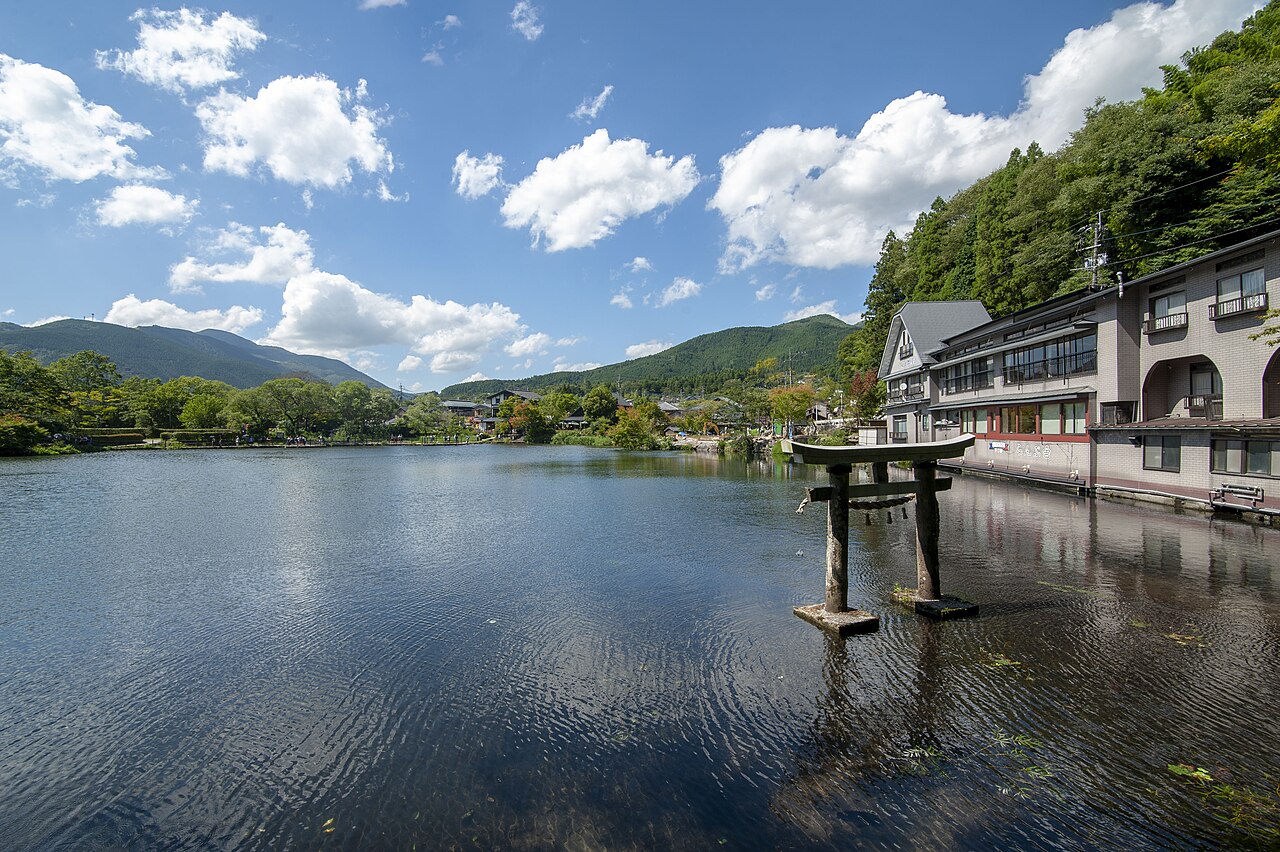
    Lake Kinrin: an evening stroll around the lake

    Lake Kinrin

    Hot springs and fresh springs well up from the lakebed. The lake is small, 15 minutes to walk round. It is busy by day and quiet by evening. The thatched public bath on the shore, Shitanyu, is mixed bathing; if that is not for you, just look from outside. The morning mist is the real sight, so come back at dawn the next day.

  7. 18:30-20:30

    Kaiseki dinner at the ryokan

    Ryokan dinners usually start at 18:00 or 18:30; fix the time when you check in, as arriving late can mean missing it. Expect Bungo beef, local chicken and mountain vegetables. Few restaurants in Yufuin stay open after 18:00, so if your room has no dinner, book a restaurant in advance.

Tonight's stay
Ryokan with its own hot spring in Yufuin, dinner and breakfast included (your choice)
Also on the way
Yufuin Floral Village, Shitanyu
Getting around
About 4 hours 25 minutes on ordinary roads rather than expressways, passing Aso, Kurokawa Onsen and the Kuju highlands, with a 10-minute stop at Aso Station and 20 minutes at Senomoto. Only three departures reach Yufuin, leaving Kumamoto Ekimae at 7:23, 8:23 and 12:08 (the 12:08 continues to Beppu). Seats must be reserved, from 2 months ahead until the day before, on the Hassya Oorai Net website or by phone, 5,500 JPY per person. If you are short on time, take the shinkansen to Kurume and change to the Yufu limited express to Yufuin, about 2 hours 20 minutes, 8,450 JPY per person reserved, but you miss the Aso scenery. Yufuin Station, Yunotsubo Street and Lake Kinrin are all walkable; the station to the lake is about 20-25 minutes. Many ryokan will pick you up at the station; phone before check-in.
Tickets
All free.
Food
Snack along Yunotsubo Street for afternoon tea, then have the kaiseki dinner at the ryokan.
Where to stay
Ryokan with its own hot spring in Yufuin, dinner and breakfast included (your choice), 2027-05-15 to 2027-05-16, 1 night. Staying in a ryokan is the point of Yufuin: check in around 15:00, soak in the hot spring, have a kaiseki dinner, then a Japanese breakfast the next morning. Ryokan are spread across the basin; pick one between Lake Kinrin and Yunotsubo Street, or within a 15-minute walk of Yufuin Station, so you can walk to the lake in the morning. Ryokan on the hillsides have better views of Mt Yufu but rely on the ryokan's pick-up or a taxi. Rooms with a private open-air bath cost a good deal more; without one, use the ryokan's private family bath. Book one to two months ahead for peak season and weekends. The price assumes two people in one room with two meals, which usually runs 50,000 to 90,000 yen.
Spending this day
about CNY 3,572Stay CNY 2,700 · Transport CNY 522 · Tickets CNY 0 · Food CNY 350

07

Bus to Beppu + From Beppu Station to Kitahama + Takegawara Onsen

Yufuin → Beppu

Takegawara Onsen: soak in a Meiji-era bathhouse or try the sand bath
  1. 09:25-09:55

    Check out and head to Yufuin Ekimae Bus Center

    Yufuin Ekimae Bus Center

  2. 10:10-11:00

    Kamenoi Bus route 36 Yufuin Station → Beppu Station West Exit

    Beppu Station West Exit bus stop

    About 50 minutes on Kamenoi Bus route 36 (Yufuin line), every 30-60 minutes during the day, no reservation, pay on board, 1,100 JPY per person. It crosses the mountains past Kijima Kogen and the Beppu Ropeway and ends at Beppu Station's West Exit, not the seaside East Exit. If you are staying in Kannawa, the single afternoon Yufurin sightseeing rapid bus (13:35 on weekdays) is easier, running via Kannawa to Beppu Station. By train, only Yufuin no Mori 3 (12:32, about 1 hour, reservation required) runs through to Beppu; other trains need a change at Oita.

  3. 11:30-12:00

    Hotel between Beppu Station's east exit and Kitahama, or a ryokan in Kannawa Onsen (your choice)

    Drop your bags first; 2 nights (2027-05-16 to 2027-05-18). The stretch from Beppu Station's east exit to the Kitahama waterfront is the most convenient: JR trains back to Hakata and buses to the Hells and Mt Takasaki all leave from here, there are plenty of places to eat at night, and many hotels have their own hot-spring baths. For more of the onsen-town feel, stay in Kannawa, within walking distance of the Hells with steam rising all along the streets, but it is a 20-30 minute bus ride from the station and there is less choice for dinner. The price is a mid-range hotel near the station, two people in one room, no meals.

  4. 12:00-13:00

    Lunch

  5. 13:15-14:00

    From Beppu Station to Kitahama: the old shopping arcades

    Beppu Station

    In front of the station are the statue of Kumahachi Aburaya, the father of Beppu tourism, and a hand bath. Walking towards the sea you pass old covered arcades and Showa-era alleys, all the way to the Kitahama waterfront and Beppu Tower.

  6. 14:15-15:45

    Takegawara Onsen: soak in a Meiji-era bathhouse or try the sand bath

    Takegawara Onsen

    A city-run bath opened in 1879; the current timber building dates from 1938. The ordinary bath is 300 yen per person, bring your own towel and soap; the sand bath is 1,500 yen per person (ordinary bath included), 8:00-22:30 with last admission at 21:30. It cannot be booked: sign up on arrival and wait for your slot. The ordinary bath is very hot, so rinse first and get in slowly. Closed the 3rd Wednesday of each month (the next day if that is a holiday).

  7. 18:30-20:00

    Dinner around Kitahama: toriten and Beppu reimen

    Kitahama, Beppu

    Toriten, chicken tempura dipped in vinegared soy sauce, is everyday Oita food; Beppu reimen are buckwheat noodles in beef broth, served hot in winter too. Seki mackerel and Seki horse mackerel sashimi are the other local choice.

Tonight's stay
Hotel between Beppu Station's east exit and Kitahama, or a ryokan in Kannawa Onsen (your choice)
Also on the way
Beppu Tower, Beppu Park
Getting around
About 50 minutes on Kamenoi Bus route 36 (Yufuin line), every 30-60 minutes during the day, no reservation, pay on board, 1,100 JPY per person. It crosses the mountains past Kijima Kogen and the Beppu Ropeway and ends at Beppu Station's West Exit, not the seaside East Exit. If you are staying in Kannawa, the single afternoon Yufurin sightseeing rapid bus (13:35 on weekdays) is easier, running via Kannawa to Beppu Station. By train, only Yufuin no Mori 3 (12:32, about 1 hour, reservation required) runs through to Beppu; other trains need a change at Oita. Beppu Station, Takegawara Onsen and Kitahama are all within a 10-minute walk of each other.
Tickets
Takegawara Onsen sand bath 1,500 yen per person; the ordinary bath alone is 300 yen per person.
Food
Kitahama and the station area have plenty of izakaya open in the evening: try toriten, Beppu reimen and Seki mackerel.
Where to stay
Hotel between Beppu Station's east exit and Kitahama, or a ryokan in Kannawa Onsen (your choice), 2027-05-16 to 2027-05-18, 2 nights. The stretch from Beppu Station's east exit to the Kitahama waterfront is the most convenient: JR trains back to Hakata and buses to the Hells and Mt Takasaki all leave from here, there are plenty of places to eat at night, and many hotels have their own hot-spring baths. For more of the onsen-town feel, stay in Kannawa, within walking distance of the Hells with steam rising all along the streets, but it is a 20-30 minute bus ride from the station and there is less choice for dinner. The price is a mid-range hotel near the station, two people in one room, no meals.
Spending this day
about CNY 1,722Stay CNY 950 · Transport CNY 192 · Tickets CNY 130 · Food CNY 450

08

Chinoike and Tatsumaki Hells + the five Kannawa Hells + lunch at Jigoku Mushi Kobo + sand bath at Hyotan Onsen

Beppu

Chinoike Jigoku and Tatsumaki Jigoku next door
The five Kannawa Hells: Umi, Oniishi Bozu, Kamado, Oniyama and Shiraike
Kannawa's streets: steam rising everywhere
  1. 08:30-09:15

    To Chinoike Jigoku

    Chinoike Jigoku

    The seven Hells are in two groups: five in Kannawa that you can walk between, and Chinoike and Tatsumaki about 3 km away. Do the far pair first and then head to Kannawa so you never double back. From Beppu Station a Kamenoi bus takes about 40 minutes (390 yen per person); or take JR to Kamegawa (about 5 minutes) and then bus 26 for about 7 minutes, or a taxi for about 1,000 yen.

  2. 09:15-10:30

    Chinoike Jigoku and Tatsumaki Jigoku next door

    Chinoike Jigoku

    Buy the combined ticket for all seven Hells at the first one you visit: 2,400 yen per person, valid on the day of purchase and the next day, one entry to each Hell. Chinoike is a red, hot mud pool; Tatsumaki is a geyser, and a red lamp over the entrance means it is about to erupt. The operator says this season the wait before each eruption is longer and eruptions are less regular, so you may wait a long time.

  3. 10:45-11:00

    Bus 26 to Kannawa

    Kannawa Onsen

    Board in front of Chinoike Jigoku and get off at Kannawa.

  4. 11:00-12:45

    The five Kannawa Hells: Umi, Oniishi Bozu, Kamado, Oniyama and Shiraike

    Umi Jigoku

    Umi Jigoku is a cobalt-blue hot pool, with a foot bath and giant water lilies in a greenhouse; Oniishi Bozu is grey mud bubbling up in rings; Kamado has pools of several colours numbered one to six and drinkable spring water; Oniyama keeps dozens of crocodiles; Shiraike is a milky-white pool. Open 8:00-17:00 all year. The steam is scalding, so keep your hands inside the railings.

  5. 12:45-14:00

    Jigoku Mushi Kobo Kannawa: steam your own lunch over hot-spring vents

    Jigoku Mushi Kobo Kannawa

    Open 10:00-19:00, last order 18:00; closed the 3rd Wednesday of each month (the next day if that is a holiday). No bookings: take a number, then buy seafood, chicken, vegetables and eggs inside and the staff tell you how long to steam them. A small steamer is 400 yen, a large one 600 yen (up to 15 minutes). The midday queue can be an hour, so come early or after 14:00. Only junior-high age and older can steam their own food.

  6. 14:00-14:45

    Kannawa's streets: steam rising everywhere

    Kannawa Onsen

    Walk along Ideyu-zaka and Miyuki-zaka: steam pours from gaps in stone walls and roadside gutters, and old inns have steam ovens at their doors. There is a free foot bath and foot steamer outside the Kobo.

  7. 15:00-17:00

    Hyotan Onsen: sand bath and waterfall baths

    Hyotan Onsen

    Kannawa's largest day-use hot spring, with a sand bath, waterfall baths, open-air baths and private family baths, open 9:00 to 1:00. Entry is 1,160 yen per person, plus 840 yen per person for the sand bath (rental yukata included). In the sand bath you lie in a yukata under sand heated by the spring and will be sweating within about 10 minutes, so drink some water first. It occasionally closes for maintenance, so check its website before you go.

  8. 17:15-18:00

    Bus back to Beppu Station

    Beppu Station

    Kannawa to Beppu Station's west exit takes about 20 minutes, 330 yen per person; skip this if you are staying in Kannawa.

  9. 18:30-20:00

    Dinner around Beppu Station: Seki mackerel sashimi or Bungo beef

    Beppu Station

Tonight's stay
Hotel between Beppu Station's east exit and Kitahama, or a ryokan in Kannawa Onsen (your choice)
Also on the way
Myoban Onsen Yunohana huts, Kannawa Mushiyu
Getting around
In the morning go from Beppu Station to Chinoike Jigoku, take bus 26 to Kannawa, walk everywhere in Kannawa, and take the bus back to the station in the evening. Kamenoi buses take transport IC cards.
Tickets
Combined ticket for the seven Hells 2,400 yen per person (valid two days); Hyotan Onsen 1,160 yen plus 840 yen for the sand bath per person. The steamer fee and ingredients for the jigoku-mushi lunch count as food.
Food
Steam your own jigoku-mushi lunch: seafood, corn, sweet potato and eggs all work well; back at the station in the evening, have Seki mackerel or Bungo beef.
If it rains
Most of the Hells are open-air but fine in the rain, and the steam is actually thicker on cold or wet days; just bring an umbrella. In heavy rain, spend longer at Hyotan Onsen.
Spending this day
about CNY 1,860Stay CNY 950 · Transport CNY 90 · Tickets CNY 370 · Food CNY 450

09

A walk on the Kitahama waterfront and the hand bath by Beppu Station + Fly home from Fukuoka Airport

Beppu

  1. 08:30-09:15

    A walk on the Kitahama waterfront and the hand bath by Beppu Station

    Kitahama, Beppu

    The waterfront is quiet in the morning. There is a free hand bath beside the Kumahachi Aburaya statue in front of the station.

  2. 10:10-10:40

    Back to the hotel to check out

  3. 10:40-13:30

    JR Sonic back to Hakata, then subway and shuttle to Fukuoka Airport International Terminal

    Fukuoka Airport

    Beppu to Hakata is about 2 hours; from Hakata the subway takes 5 minutes to the airport's Domestic Terminal station (260 yen), then the free shuttle bus to the International Terminal, or take a Nishitetsu bus straight to the International Terminal from Hakata Bus Terminal. For an afternoon flight, take a train around 11:30 at the latest. If your flight leaves from Oita Airport, take the Airliner airport bus from Beppu Station or Kitahama, about 45-55 minutes, 1,600 yen per person, no booking needed.

  4. around 16:30

    Check in for your flight and fly home

    Fukuoka Airport

    Move this to your own flight time; with a morning flight, drop the morning's plans.

Also on the way
Beppu Station
Getting around
Be at the airport 3 hours before take-off.
Tickets
All free.
Spending this day
about CNY 795Transport CNY 615 · Tickets CNY 0 · Food CNY 180

Budget guide

About 7,000 - 10,000 CNY per person (flights not included)

Every figure in this route's budget is a rough estimate, and hotels are given only as areas to stay in. After copying the route, change them to fit your own flights, hotels and spending.

CNY amounts are estimated at 1 CNY ≈ 23.8 JPY. Most shops take cards, but small shops in the onsen towns and some buses take cash only; transit IC cards such as SUGOCA and Suica work across Kyushu.

  • Accommodation gives recommended areas only; book Yufuin ryokan (with dinner) early, as weekends and autumn colours sell out fast
  • Yufuin no Mori is all reserved seats and opens for booking on JR Kyushu's website a month ahead
  • Mainland Chinese passport holders need a Japanese visa (applied for through an agency); Hong Kong, Macau and Taiwan passports are usually visa-free; check with Japan's Ministry of Foreign Affairs before you go
  • Trains and buses in Kyushu run less often than on Honshu; check the timetable before each connection

Prices, opening hours and visa rules change; check official information before you go. Cover: Lake Kinrin, Yufuin, HyunJae Park, Public domain.